
You can't always be with them.
This can.
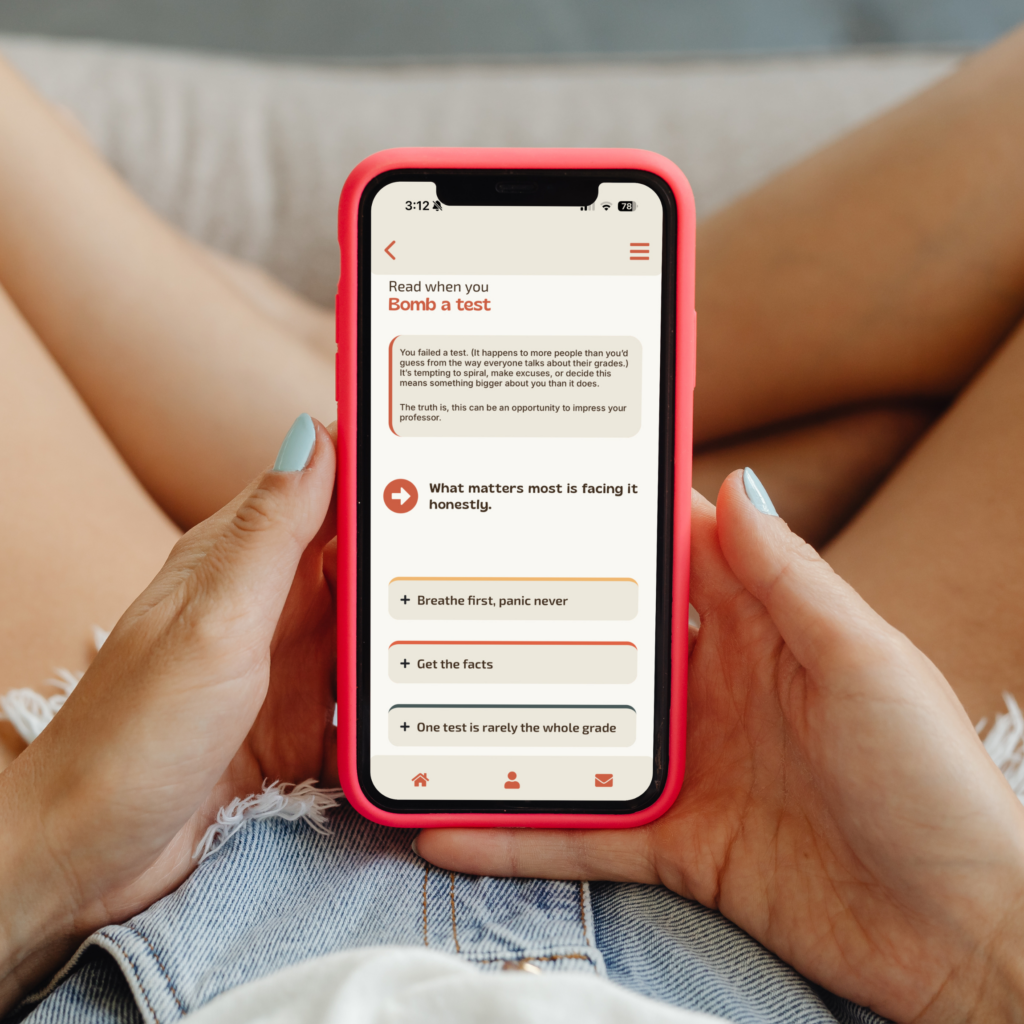
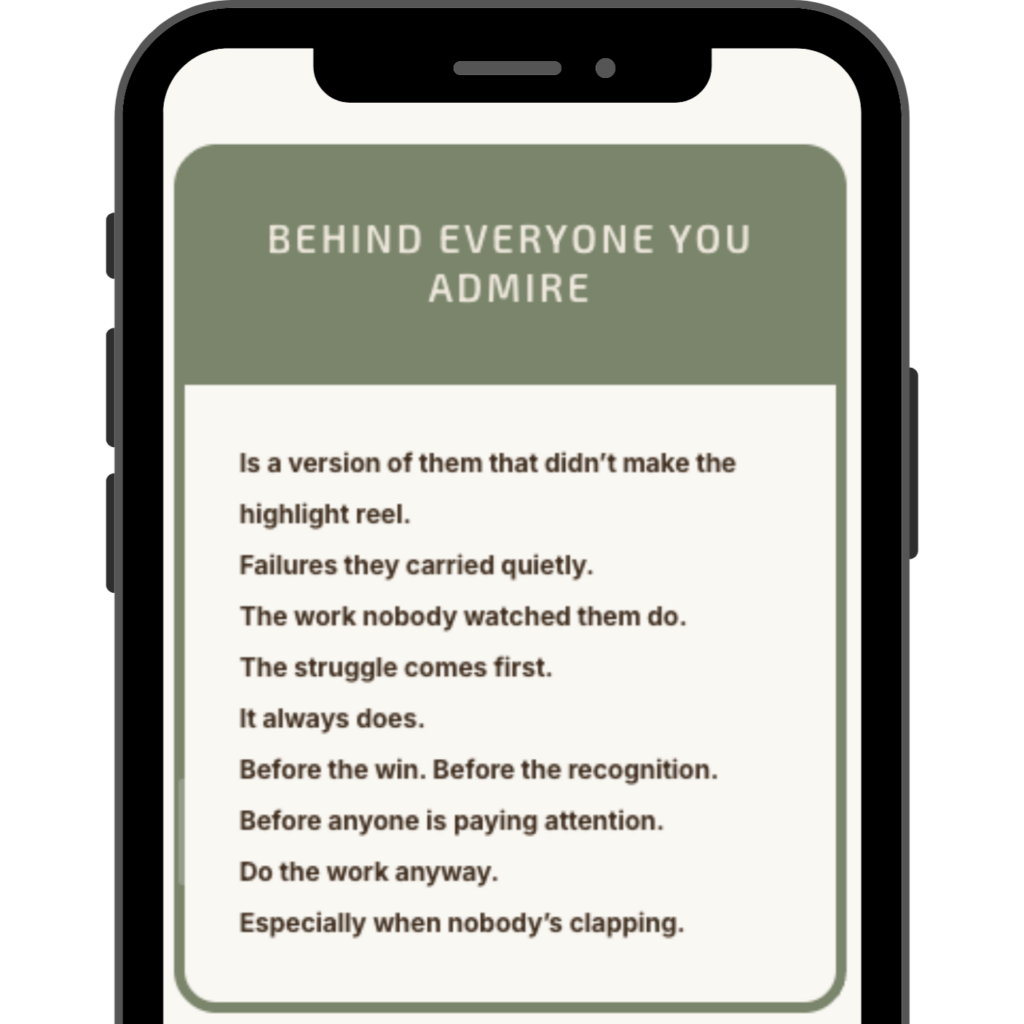
Advice from mom, in their pocket, right when they need it.
Put Yourself in their Pocket
Admit it. If you could sit in their dorm and whisper the right answer at the exact right second, you’d do it. Who wouldn’t?
Good news: you can’t. Because our kids need to get some things wrong on their own, sit in it a while, and figure out what comes next. The more we swoop in, the fewer chances they get to do that.
You already know this. It’s still annoying.
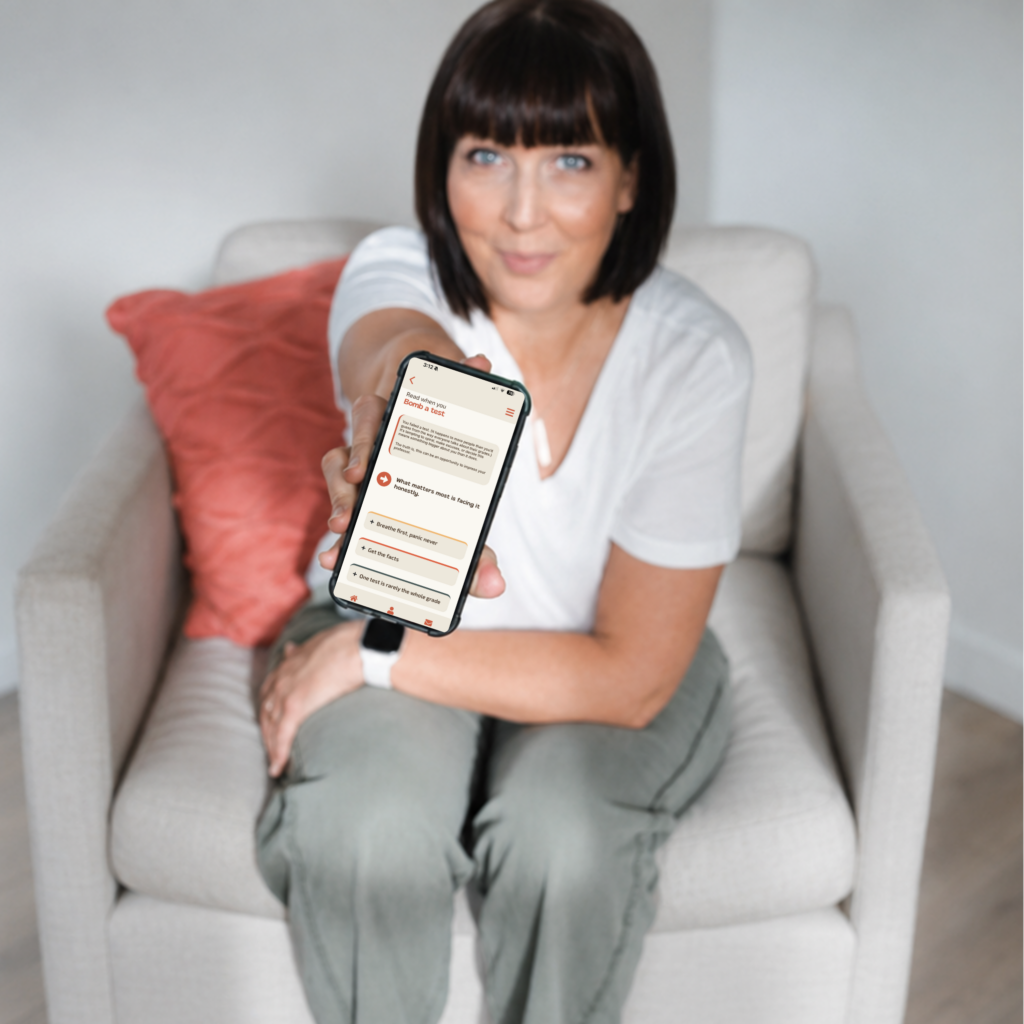
But trusting them to handle it doesn’t mean sending them out empty-handed. It means putting mom’s advice in their pocket, ready for the moment they actually want it, with none of the pressure of you standing right there.
Here’s How is an app-like site your kid opens the moment they face something new.
Each moment’s page starts with When You…
- Bomb a test
- Can't make friends
- Can't stop replaying something you said
- Have the stomach flu
They tap the moment that matches the
day they’re having and they get advice from “mom.”
Calm. Confident. Compassionate.
And just snarky enough to make them laugh and roll their eyes.
Here’s How is an app-like site your kid opens the moment they face something new.
Each moment’s page starts with When You…
- Bomb a test
- Can't make friends
- Can't stop replaying something you said
- Have the stomach flu
They tap the moment that matches the day they’re having and they get advice from “mom.”
Calm. Confident. Compassionate. And just snarky enough to make them laugh and roll their eyes.
Want them to call home? Give them wins.
We all want our kids to call home. And there are really only two reasons they will: to ask for help, or to brag about something that went right. (Okay, three. They might still call for money. That one I can't fix.)
Asking for help costs a new young adult something.
Your kid has to say "I can't remember how to do this" out loud, to the person who definitely taught them how, probably twice. That's an expensive sentence. They'd rather sit in the problem for three weeks than say it to you.
Bragging pays.
So when the roommate thing gets handled, or office hours goes better than they expected, that's a call they want to make. That's the whole point of Here's How: the advice already happened, quietly, at midnight, so they skipped the expensive sentence entirely. Nobody had to admit anything. They call to tell you the success story, and they hang up a little more sure of themselves.
The internet has never once believed in your kid.
Ask a chatbot for advice and it’ll agree with you. Ask again and it’ll agree harder. It’s LeFou following Gaston around telling him every idea he’s ever had is genius. That feels good at midnight. It builds nothing, and the thing your kid needs to build right now is the ability to think it through.
Google goes the other direction. One worried question and they’re eight tabs deep in everything that could go wrong. That’s Mother Gothel’s whole parenting strategy, and she locked a girl in a tower.
Neither one believes your kid can handle it.
Here’s How starts somewhere else. It assumes your kid is smart, decent, and actually wants to be good to people. It also assumes they haven’t done any of this yet, which isn’t a problem. That’s just being nineteen.
So they get the information and they get the choice, because they’ll either choose well or learn something.

So, who wrote this advice?
It’s Me. I’m the mom. I’m Misty. I have four kids, and I had all four of them in just over three years. Twins first, which is a great way to find out early that you have no idea what you’re doing.
My twins graduated this year, so I went looking for a personalized college gift and found those “open when” ones. You know them: envelopes that say “open when you’re homesick” or “open when you’re broke,” with a little something tucked inside, usually a gift card quietly bankrolling their every feeling at Cold Stone. Loved the concept. Couldn’t find a version that did the job I wanted it to.
You see, we’ve got all sorts of diagnosed letters in our home: ADHD, AuDHD, OCD, ODD, MDD, GAD, which makes super practical advice a premium commodity. So I started keeping a running list of things I wanted to tell them, most of which they won’t care about until the moment they need it. “Open when you fail a test” and “open when your girlfriend breaks up with you.” Eventually the list ran near four hundred moments. If I was going to do all that work, I figured your kids could use it too.
My own AuDHD brain loves research. I find experts I trust, read everything I can get my hands on, try most of it, and keep whatever works in my house on a random Tuesday. What survives that process is what’s in the guides, and it’s why the pages are so practical. I got tired of advice that sounded lovely and helped nobody.
I also believe we grow best by choosing, not by complying, so nothing in here “shoulds” on your kids. No shame. Lecturing has never worked on a single one of mine, and I’ve tested it thoroughly.
I really like teenagers and young adults, even the ones that aren’t mine. They’re brave, and funny, and full of ideas, and they’ll tell you what they really think if you don’t flinch first. They’re walking into a hard stretch, with everybody and their neighbor holding an opinion about their whole generation. They deserve somebody who believes they can handle it.
Take a Peek Inside:
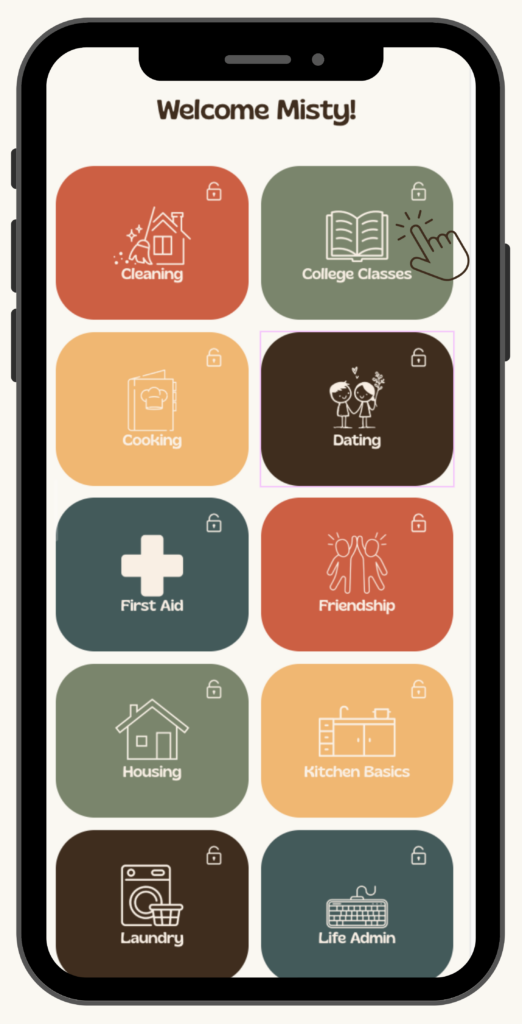
20 guides
Each guide is a collection of moments your kid will face around a specific topic.
There are 20 guides in total:
- Cleaning
- College Classes
- Cooking
- Dating
- First Aid
- Friendship
- Home Maintenance
- Housing
- Kitchen Basics
- Laundry
- Life Admin
- Mental Health
- Money
- Physical Health
- People Skills
- Personal Safety
- Tech Safety
- Transportation
- Travel
- Work
400+ Moments
Click on a guide and you’ll see its homepage which will include 15 to 25 moments: the ones that trip kids up, the ones you’d give anything to be there for.
Each moment starts when “Open When…”
- You need to rideshare
- Aren't sleeping well
- Need to spend less
- Need to get a stain out
- Pack for a weekend trip
- A friend owns you money
- Forward your mail
- Sign a lease
- Someone breaks up with you
- Need to clean up your digital footprint
- Setup utilities
- Get locked out of your car
- Have the stomach flu
- Need to clean a bathroom
- Need to followup after an interview
- Address an envelope
Four Parts
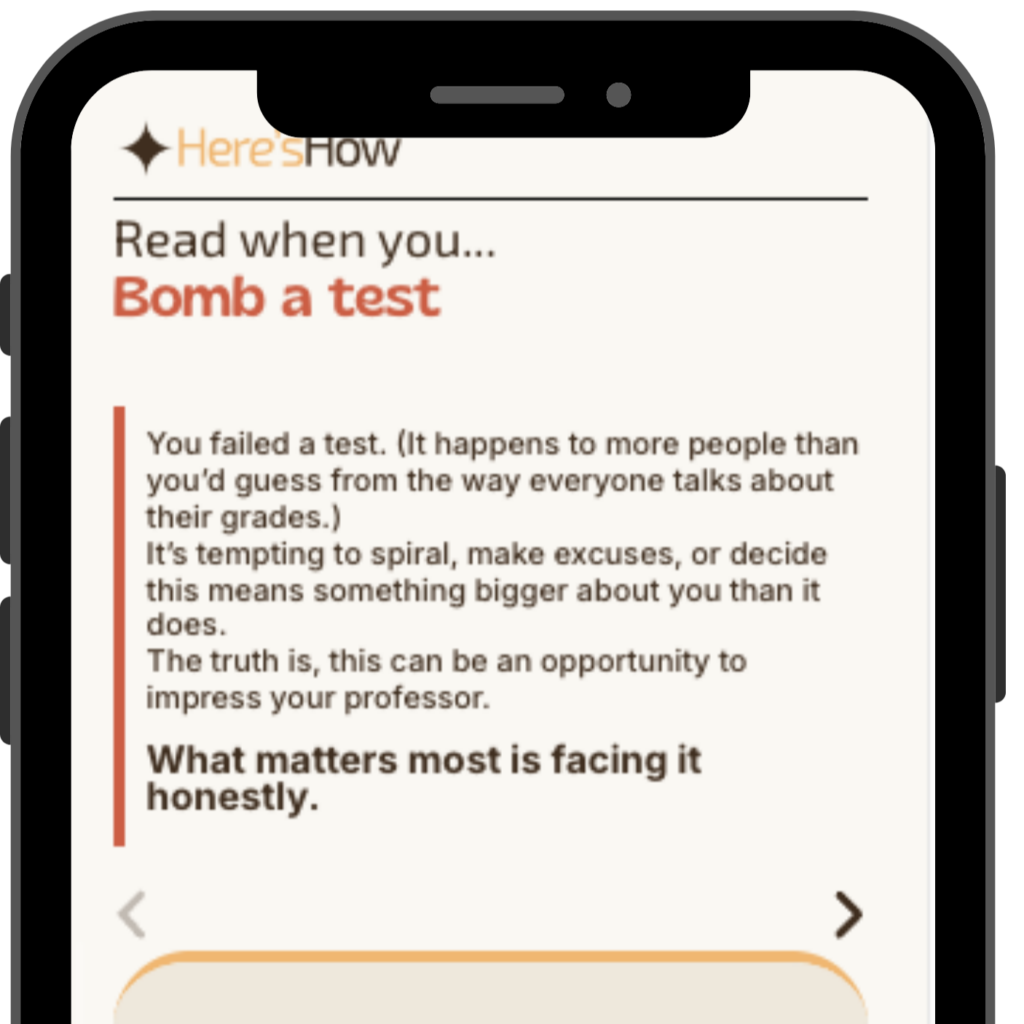
Each moment has its own page full of advice. This comes in 4 stages:
1. The Reset
It starts by naming what’s happening, honestly.
No pep talk, just “I get it”.
Then, a callout – the moment where mom says “I know what you’re thinking about doing. I get that too”. No judgment.
Next, clarity. The truth. Sometimes refreshing. Sometimes challenging. Always helpful.
2. The Point
One line: “What matters most is…”
The whole point of the page in a sentence.
If they remember nothing else, hopefully it’s this.
3. The Plan
4. The Principle
Last, the part that’s less how-to and more heart.
One idea underneath the moment, big enough to use anywhere.
Plan examples
Here’s the plan from one moment in every guide current guide available for purchase. Real steps, in order, for a real thing that’s gone wrong. Enough to tell you whether this advice is any good and whether it sounds like it came from a mom instead of AI. Both of which are fair things to want to know before you spend money on me.
COLLEGE CLASSES: Open when you can't get motivated to study
Check that voice in your head
“I’m so lazy, what is wrong with me, everyone else has it figured out” is not a motivation strategy. It’s a way to feel worse while still getting nothing done, and a lot of burnout grows straight out of that running commentary.
Slumps and detours are baked into the process of being human, not proof you’re broken. Adjust the expectation instead of beating yourself up.
Talk to yourself the way you’d talk to a stuck friend.
Write down 3 tiny wins. Right Now
Don’t save this for later. Motivation builds when we think POSITIVELY.
Write three things you’ve already done today, however small.
Brushed my teeth, showed up to class, answered an email.
Smiled at someone who looked sad, ate a vegetable, texted mom.
Progress is fuel for motivation. Tiny progress counts.
Check your body before you blame your willpower
No sleep, no food, no movement, and your brain won’t show up no matter how hard you push.
Before you decide you “have no discipline,” or keep trying to “push through,” ask if you’ve slept, eaten real food, and moved today.
If not, a short walk, healthy snack, or 20 minute quick nap does more for focus than another hour of forcing it.
Kill the distractions
Your phone face-down on the desk isn’t out of reach, and your brain knows it. It tugs at your focus the whole time. Turn it off. Put it in another room if you can, a drawer if you can’t.
The perfect playlist and the aesthetic desk setup can wait. That’s procrastination wearing a productivity costume.
Pick a lane and stay in it. Flipping between tasks is a reliable way to get less done and hand yourself more to feel bad about later.
Make a 5 minute deal with yourself
5 minutes of doing something often drags the motivation in behind it. And you can do anything for five minutes. Promise.
If you know what you need to do, spend 5 minutes on the “shrink it until it is silly” step and do THAT for 5 minutes.
If you aren’t sure what to do, spend 5 minutes on the “Brain Dump” step.
Set a timer, start, and give yourself full permission to quit the second it goes off. Most of the time you won’t.
Brain Dump
This step is only helpful when you are overwhelmed by all you need to do and can’t decide where to start. If you know what you need to do go back to the “Shrink it till it’s silly” step.
When you can’t start because your head is a junk drawer of stress and everything you’re supposed to be doing, get it out. Spend your five minutes writing down every single thing rattling around up there. All of it. No order, no editing.
Once it’s on paper instead of looping in your brain, pick one thing to tackle that is both important and urgent. Need help? Try using SureDo.
Once you know what you need to do, move on to “shrink it till it’s silly.”
Shrink it till it's silly
This step is only helpful when know what you need to do. If you aren’t sure, do the “Brain Dump” step instead.
When your brain hears “write the essay,” it balks.
Break your task into smaller steps. In fact, the first three steps should take thirty seconds or less each. For example:
- Open the document
- Type a title
- Write one sentence even if it's bad and you'll need to fix it later
Make them small enough that skipping them would be a little embarrassing.
Once you’re moving, the next step stops being a decision and just happens.
Change Your State
If you’ve spent 5 minutes brain dumping or shrinking your tasks and you still aren’t moving, try changing your state.
Get up and move, blast one loud song, splash your face with cold water, do 20 jumping jacks.
Still Struggling? Switch gears
If you’ve done all the above an your motivation still hasn’t kicked in, you might just need to switch tasks.
Banging your head against the one task you’re feel you are “supposed” to do isn’t going to help. Go do one that feels less daunting.
If the paper won’t budge, answer the email you’ve been dodging or rough out notes for that other project.
Getting anything finished puts a point on the board and makes the next thing feel more possible.
STILL Struggling? Rest
If none of this has worked, you’re likely running on fumes, and no trick is going to fix that. That’s just part of being human.
You likely need sleep, a real day off, and something fun that has nothing to do with your to-do list.
Take some time to power down all the way and the drive will likely come back on its own.
FRIENDSHIP: Open when you want to turn an aquaintence into a friend
Vague invites go nowhere
“We should hang out sometime” is where friendships go quiet. It sounds warm, but nobody acts on it, including you. Give them something they can say yes or no to: a day, a time, a specific thing.
“We should hang out sometime” is the thing people say when they want to sound friendly and do nothing about it. Try:
- "Want to grab food Thursday after class?"
- "I'm heading to the gym at 5, come with?"
- "There's a thing on campus Friday, want to go together?"
Leave the room you met in
If you only ever see someone in one place, you stay one-place friends. Classmates. Coworkers. The people at church. Nice, but a little stuck.
The shift happens when you see them somewhere that isn’t the usual spot.
Grab lunch off campus. Make a Target run together. Go to a movie, hit a thrift store, walk somewhere with no destination.
Anything that has nothing to do with how you met. Two people can sit next to each other for a whole semester and still know nothing about each other, which is honestly kind of a feat.
Say one true thing
Surface talk keeps things pleasant and going nowhere. The weather, the homework, how tired everyone is.
To get past it, offer something slightly real: what you’re actually worried about, a real opinion instead of a safe one. When you go a little first, they usually go a little back. You don’t have to hand over your whole history. You just have to go a little past the weather.
Bring the small stuff back
When someone mentions something (a test, a sick pet, an interview they’re nervous about), file it away and bring it up next time.
“How’d the interview go?” tells them you were actually listening, not just waiting for your turn to talk. Small move, big return.
Not everyone says yes
Sometimes you go first and it fizzles. They’re busy, they’ve already got their people, the timing’s wrong. It stings, but it isn’t a verdict on you.
Try someone else. The people worth having around get found by reaching out more times, not fewer. A no here usually means “this person, this week,” not “you, forever,” even though your gut will argue the point.
PERSONAL SAFETY: Open when drugs come out and you want an exit
Don't take anything handed to you
Not a pill, not a drink, not something described as the same as something you’ve had before.
Pressed pills are frequently not what they’re sold as, and fentanyl shows up in things people didn’t think contained it. There’s no way to look at something and know.
That’s true whether or not you’re using anything on purpose. It’s mostly a rule about accepting things from people.
Just go
- "I'm out, I've got an early thing."
- "My ride's here."
- "I'm not feeling great."
Text somebody from the sidewalk instead of announcing it in the room. A group is a lot easier to leave than a conversation about leaving.
Don't lecture on your way out
You can leave and still like these people. Those aren’t connected.
Saying something about it turns your exit into an argument, and now you’re stuck in a hallway defending yourself instead of being in your car. You can have opinions in your own apartment, for free, later.
If someone asks why, “not tonight” is a full answer.
The practical reason
Being in the room can be a real problem for you even if you never touch anything. Depending on where you are and whose place it is, people present can end up caught in a possession charge.
Campus discipline is its own separate track from the law, and it can reach your housing, your scholarship, an athletic spot, or a visa.
This room can cost you things you spent years on. You cannot explain your way out of a police report as fast as you can walk out that door.
After
You don’t owe anybody a conversation about it tomorrow, and you don’t have to stop being friends with people over one night.
But if you keep ending up in rooms you want to leave, that’s worth noticing. Not with guilt. Just noticing.
Say something if you care about someone in that room
If it’s a party full of people you barely know, leaving is the whole job. You don’t owe strangers a conversation and you’re not going to change anything by having one.
It’s different if someone in there matters to you. Then walking out and never mentioning it again isn’t kindness, it’s just easier. Nobody has ever been helped by a friend who noticed and decided it wasn’t their business.
Say it the next day, one-on-one, when they’re sober and nobody’s watching. A room full of people who are already high is the worst place for it, because you’ll get an audience, an argument, and a friend who has to defend themselves in front of everyone.
Keep it short and about them, not about drugs. “I left because I didn’t want to be there for that. I’m not mad at you. I just don’t want you to die, and that’s a real possibility.”
If it’s bad enough that you’re scared, tell someone who loves them. A parent, a sibling, a coach, a religious leader, a counselor. It’ll feel like betrayal and it isn’t.
One exception to the timing: if someone is about to take something right now that could kill them, or is already in trouble, you say something immediately and loudly and you don’t worry about the room.
Notes from home
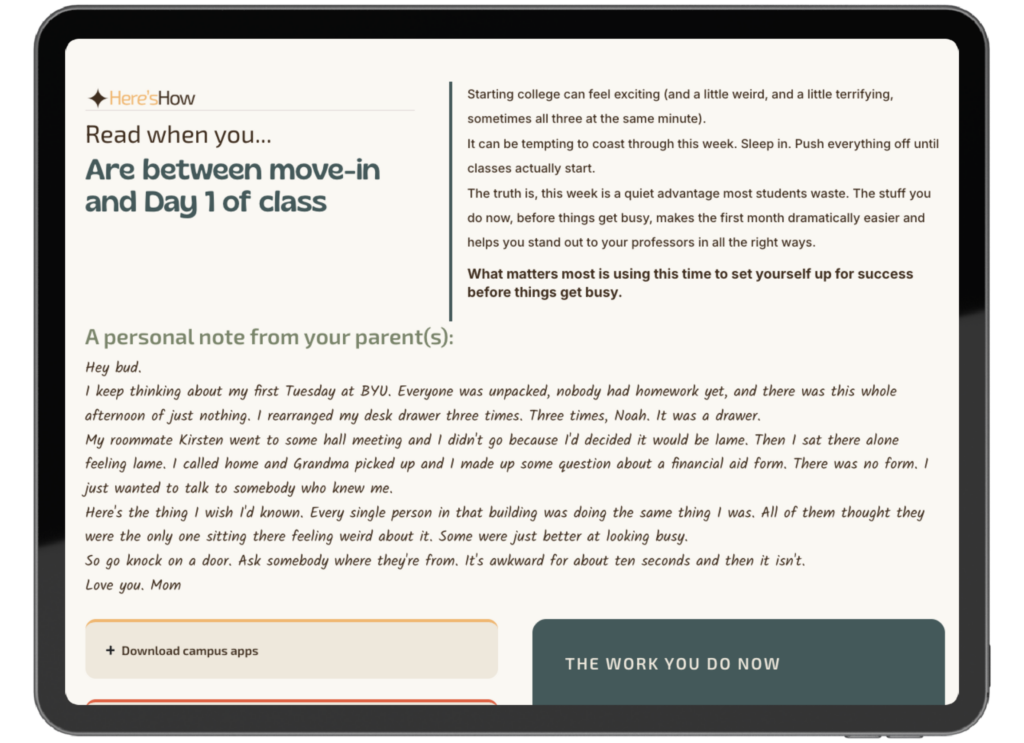
Each moment has a place you can leave a little of yourself on the page. Only your kid sees it.
The story you keep meaning to tell, the thing I missed, the inside joke that’s just for the two of you.
So when they open it, some of what they find is you.
Each guide is a collection of moments your kid will face around a specific topic.
There are 20 guides in total:
- Cleaning
- College Classes
- Cooking
- Dating
- First Aid
- Friendship
- Home Maintenance
- Housing
- Kitchen Basics
- Laundry
- Life Admin
- Mental Health
- Money
- Physical Health
- People Skills
- Personal Safety
- Tech Safety
- Transportation
- Travel
- Work
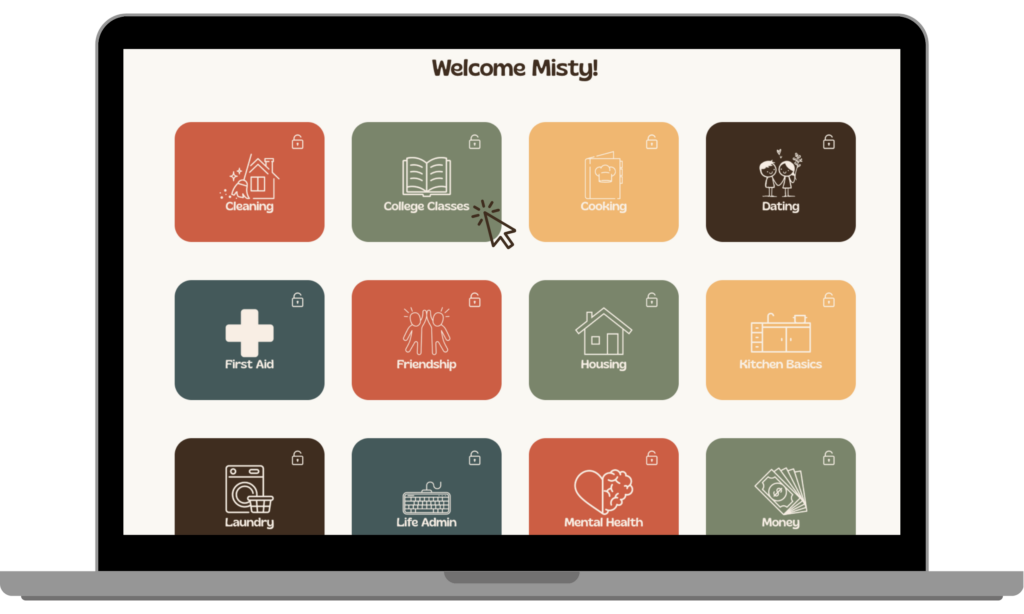
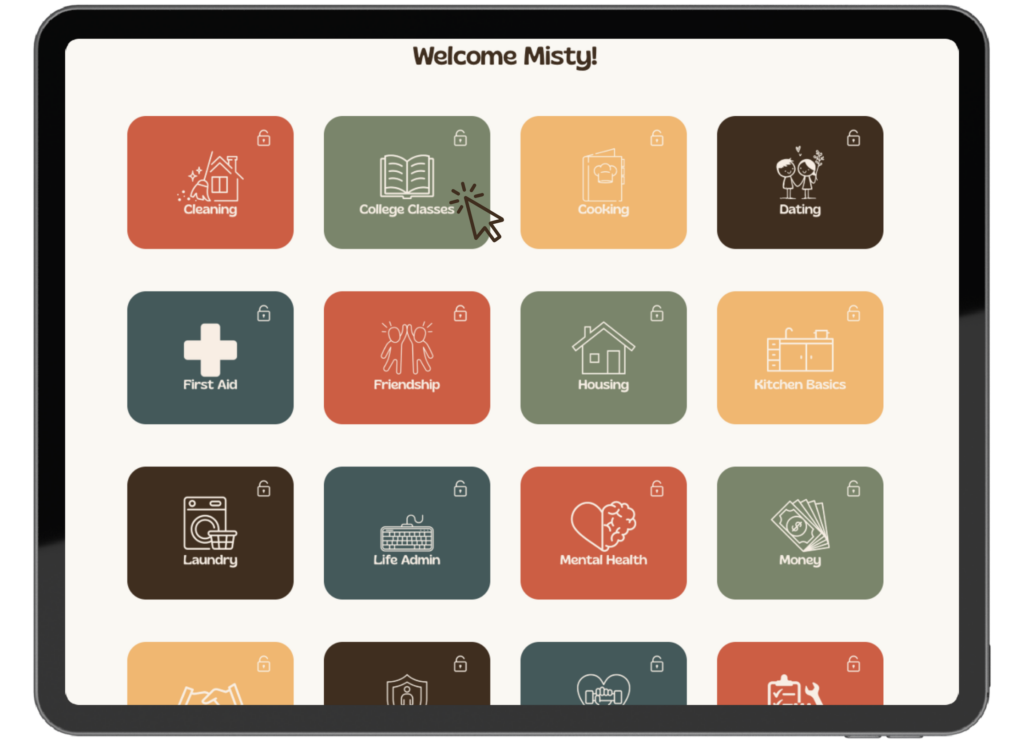
Click on a guide and you’ll see its homepage which will include 15 to 25 moments: the ones that trip kids up, the ones you’d give anything to be there for.
Each moment starts when “Open When…”
- You need to rideshare
- Aren't sleeping well
- Need to spend less
- Need to get a stain out
- Pack for a weekend trip
- A friend owns you money
- Forward your mail
- Sign a lease
- Someone breaks up with you
- Need to clean up your digital footprint
- Setup utilities
- Get locked out of your car
- Have the stomach flu
- Need to clean a bathroom
- Need to followup after an interview
- Address an envelope
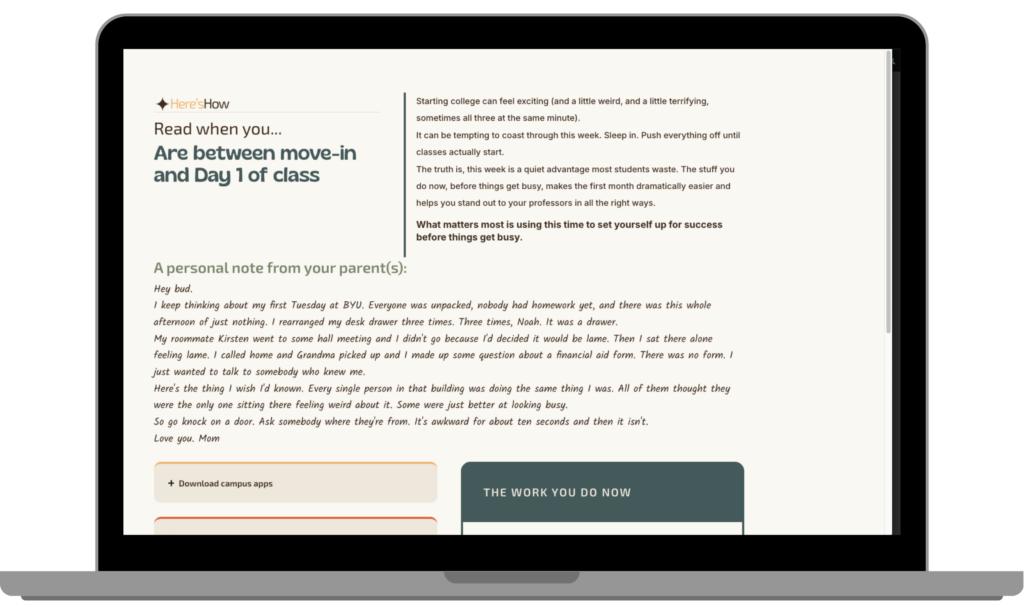
Each moment has its own page full of advice. This comes in 4 stages:
Top right
The Reset
It starts by naming what’s happening, honestly.
No pep talk, just “I get it”.
Then, a callout – the moment where mom says “I know what you’re thinking about doing. I get that too”. No judgment.
Next, clarity. The truth. Sometimes refreshing. Sometimes challenging. Always helpful.
Final Line, Top right
The Point
One line: “What matters most is…”
The whole point of the page in a sentence.
If they remember nothing else, hopefully it’s this.
Steps on the left
The Plan
Box on the right
The Principle
Last, the part that’s less how-to and more heart.
One idea underneath the moment, big enough to use anywhere.
Here’s the plan from one moment in every guide current guide available for purchase. Real steps, in order, for a real thing that’s gone wrong. Enough to tell you whether this advice is any good and whether it sounds like it came from a mom instead of AI. Both of which are fair things to want to know before you spend money on it.
COLLEGE CLASSES: Open when you can't get motivated to study
Check that voice in your head
“I’m so lazy, what is wrong with me, everyone else has it figured out” is not a motivation strategy. It’s a way to feel worse while still getting nothing done, and a lot of burnout grows straight out of that running commentary.
Slumps and detours are baked into the process of being human, not proof you’re broken. Adjust the expectation instead of beating yourself up.
Talk to yourself the way you’d talk to a stuck friend.
Write down 3 tiny wins. Right Now
Don’t save this for later. Motivation builds when we think POSITIVELY.
Write three things you’ve already done today, however small.
Brushed my teeth, showed up to class, answered an email.
Smiled at someone who looked sad, ate a vegetable, texted mom.
Progress is fuel for motivation. Tiny progress counts.
Check your body before you blame your willpower
No sleep, no food, no movement, and your brain won’t show up no matter how hard you push.
Before you decide you “have no discipline,” or keep trying to “push through,” ask if you’ve slept, eaten real food, and moved today.
If not, a short walk, healthy snack, or 20 minute quick nap does more for focus than another hour of forcing it.
Kill the distractions
Your phone face-down on the desk isn’t out of reach, and your brain knows it. It tugs at your focus the whole time. Turn it off. Put it in another room if you can, a drawer if you can’t.
The perfect playlist and the aesthetic desk setup can wait. That’s procrastination wearing a productivity costume.
Pick a lane and stay in it. Flipping between tasks is a reliable way to get less done and hand yourself more to feel bad about later.
Make a 5 minute deal with yourself
5 minutes of doing something often drags the motivation in behind it. And you can do anything for five minutes. Promise.
If you know what you need to do, spend 5 minutes on the “shrink it until it is silly” step and do THAT for 5 minutes.
If you aren’t sure what to do, spend 5 minutes on the “Brain Dump” step.
Set a timer, start, and give yourself full permission to quit the second it goes off. Most of the time you won’t.
Brain Dump
This step is only helpful when you are overwhelmed by all you need to do and can’t decide where to start. If you know what you need to do go back to the “Shrink it till it’s silly” step.
When you can’t start because your head is a junk drawer of stress and everything you’re supposed to be doing, get it out. Spend your five minutes writing down every single thing rattling around up there. All of it. No order, no editing.
Once it’s on paper instead of looping in your brain, pick one thing to tackle that is both important and urgent. Need help? Try using SureDo.
Once you know what you need to do, move on to “shrink it till it’s silly.”
Shrink it till it's silly
This step is only helpful when know what you need to do. If you aren’t sure, do the “Brain Dump” step instead.
When your brain hears “write the essay,” it balks.
Break your task into smaller steps. In fact, the first three steps should take thirty seconds or less each. For example:
- Open the document
- Type a title
- Write one sentence even if it's bad and you'll need to fix it later
Make them small enough that skipping them would be a little embarrassing.
Once you’re moving, the next step stops being a decision and just happens.
Change Your State
If you’ve spent 5 minutes brain dumping or shrinking your tasks and you still aren’t moving, try changing your state.
Get up and move, blast one loud song, splash your face with cold water, do 20 jumping jacks.
Still Struggling? Switch gears
If you’ve done all the above an your motivation still hasn’t kicked in, you might just need to switch tasks.
Banging your head against the one task you’re feel you are “supposed” to do isn’t going to help. Go do one that feels less daunting.
If the paper won’t budge, answer the email you’ve been dodging or rough out notes for that other project.
Getting anything finished puts a point on the board and makes the next thing feel more possible.
STILL Struggling? Rest
If none of this has worked, you’re likely running on fumes, and no trick is going to fix that. That’s just part of being human.
You likely need sleep, a real day off, and something fun that has nothing to do with your to-do list.
Take some time to power down all the way and the drive will likely come back on its own.
FRIENDSHIP: Open when you want to turn an aquaintence into a friend
Vague invites go nowhere
“We should hang out sometime” is where friendships go quiet. It sounds warm, but nobody acts on it, including you. Give them something they can say yes or no to: a day, a time, a specific thing.
“We should hang out sometime” is the thing people say when they want to sound friendly and do nothing about it. Try:
- "Want to grab food Thursday after class?"
- "I'm heading to the gym at 5, come with?"
- "There's a thing on campus Friday, want to go together?"
Leave the room you met in
If you only ever see someone in one place, you stay one-place friends. Classmates. Coworkers. The people at church. Nice, but a little stuck.
The shift happens when you see them somewhere that isn’t the usual spot.
Grab lunch off campus. Make a Target run together. Go to a movie, hit a thrift store, walk somewhere with no destination.
Anything that has nothing to do with how you met. Two people can sit next to each other for a whole semester and still know nothing about each other, which is honestly kind of a feat.
Say one true thing
Surface talk keeps things pleasant and going nowhere. The weather, the homework, how tired everyone is.
To get past it, offer something slightly real: what you’re actually worried about, a real opinion instead of a safe one. When you go a little first, they usually go a little back. You don’t have to hand over your whole history. You just have to go a little past the weather.
Bring the small stuff back
When someone mentions something (a test, a sick pet, an interview they’re nervous about), file it away and bring it up next time.
“How’d the interview go?” tells them you were actually listening, not just waiting for your turn to talk. Small move, big return.
Not everyone says yes
Sometimes you go first and it fizzles. They’re busy, they’ve already got their people, the timing’s wrong. It stings, but it isn’t a verdict on you.
Try someone else. The people worth having around get found by reaching out more times, not fewer. A no here usually means “this person, this week,” not “you, forever,” even though your gut will argue the point.
PERSONAL SAFETY: Open when drugs come out and you want an exit
Don't take anything handed to you
Not a pill, not a drink, not something described as the same as something you’ve had before.
Pressed pills are frequently not what they’re sold as, and fentanyl shows up in things people didn’t think contained it. There’s no way to look at something and know.
That’s true whether or not you’re using anything on purpose. It’s mostly a rule about accepting things from people.
Just go
- "I'm out, I've got an early thing."
- "My ride's here."
- "I'm not feeling great."
Text somebody from the sidewalk instead of announcing it in the room. A group is a lot easier to leave than a conversation about leaving.
Don't lecture on your way out
You can leave and still like these people. Those aren’t connected.
Saying something about it turns your exit into an argument, and now you’re stuck in a hallway defending yourself instead of being in your car. You can have opinions in your own apartment, for free, later.
If someone asks why, “not tonight” is a full answer.
The practical reason
Being in the room can be a real problem for you even if you never touch anything. Depending on where you are and whose place it is, people present can end up caught in a possession charge.
Campus discipline is its own separate track from the law, and it can reach your housing, your scholarship, an athletic spot, or a visa.
This room can cost you things you spent years on. You cannot explain your way out of a police report as fast as you can walk out that door.
After
You don’t owe anybody a conversation about it tomorrow, and you don’t have to stop being friends with people over one night.
But if you keep ending up in rooms you want to leave, that’s worth noticing. Not with guilt. Just noticing.
Say something if you care about someone in that room
If it’s a party full of people you barely know, leaving is the whole job. You don’t owe strangers a conversation and you’re not going to change anything by having one.
It’s different if someone in there matters to you. Then walking out and never mentioning it again isn’t kindness, it’s just easier. Nobody has ever been helped by a friend who noticed and decided it wasn’t their business.
Say it the next day, one-on-one, when they’re sober and nobody’s watching. A room full of people who are already high is the worst place for it, because you’ll get an audience, an argument, and a friend who has to defend themselves in front of everyone.
Keep it short and about them, not about drugs. “I left because I didn’t want to be there for that. I’m not mad at you. I just don’t want you to die, and that’s a real possibility.”
If it’s bad enough that you’re scared, tell someone who loves them. A parent, a sibling, a coach, a religious leader, a counselor. It’ll feel like betrayal and it isn’t.
One exception to the timing: if someone is about to take something right now that could kill them, or is already in trouble, you say something immediately and loudly and you don’t worry about the room.
Each moment has a place you can leave a little of yourself on the page. Only your kid sees it.
The story you keep meaning to tell, the thing I missed, the inside joke that’s just for the two of you.
So when they open it, some of what they find is you.
*Don’t have anything to say about a moment? There’s no pressure to fill them all.
If you don’t leave a note, nothing shows (not even the “A Personal Note From Your Parents” title), so your kid never knows there was a spot to fill.
About Founders Pricing
Founders pricing is the biggest discount you will ever see. When it ends depends on what you’re buying:
- A single finished guide: after the first 50 people buy it.
- A bundle still being built: once every guide in it is live.
It also comes with benefits:
- Pay once. No subscription, ever.
- Add up to 6 kids at no additional cost
- Request moments & vote on what gets added next
You have choices:
New moments get added to the guides over time. As a founder, when they land, they’re yours.
No “loyal customers can now pay again” nonsense.
A single guide: $29 $19
*Founders pricing and benefits for the first 50 of each sold.
Here's How: Any Single Guide
Everything mom knows about one topic
- One single guide (15-25 moments)
- Save $10 on the price of each guide
- Pay once. No subscription, ever.
- Up to 6 kids free (later, $5 each)
- Request moments & shape what gets added next
*You’re buying before I’ve gotten any reviews, and I built the founders deal to make it worth your while.
Founders pricing for each individual guide sticks around until 50 people have purchased each one.
The Freshman Bundle: $119 $69
*Founders pricing & benefits until all 9 guides are live
Here's How: The First Year
Everything mom knows about leaving home.
Less than $14 $8 per guide
- College Classes Guide
- Friendship Guide
- Safety Guide
- Mental Health Guide (coming mid-Aug 2026)
- Laundry Guide (coming late Aug 2026)
- Money Guide (coming early Sept 2026)
- Life Admin Guide (coming mid-Sept 2026)
- Dating Guide (coming late-Sept 2026)
- Tech Safety Guide (coming early-Oct 2026)
*You’re buying the whole bundle before the whole bundle exists, and I built the founders deal to make that worth your while.
Founders benefits & pricing stick around until all 9 guides are live, then it’s gone for good. I’m aiming to have this bundle completed by early October 2026.
- Save $50 on the The Freshman Bundle price
- Pay once. No subscription, ever.
- Up to 6 kids free (later, $10 each)
- Request moments & shape what gets added next
The Adulting Bundle: $199 $129
*Founders pricing & benefits until all 20 guides are live.
Here's How: All Of It
Everything mom knows.
Less than $10 $7 per guide
- College Classes Guide
- Friendship Guide
- Safety Guide
- Mental Health Guide (coming mid-Aug 2026)
- Laundry Guide (coming late Aug 2026)
- Money Guide (coming early Sept 2026)
- Life Admin Guide (coming mid-Sept 2026)
- Dating Guide (coming late-Sept 2026)
- Tech Safety Guide (coming early-Oct 2026)
To Be Released Oct-Jan:
- Physical Health Guide
- Transportation Guide
- Cleaning Guide
- Kitchen Basics Guide
- Cooking Guide
- Employment Guide
- Travel Guide
- Housing Guide
- Home Maintenance and Basic Repairs Guide
- Etiquette Guide
- First Aid Guide
*You’re buying the whole thing before the whole thing exists, and I built the founders deal to make that worth your while.
Founders benefits & pricing stick around until all 20 guides are live, then it’s gone for good. I’m aiming to have all guides completed by late January 2027.
- Save $70 on the Adulting Bundle price
- Pay once. No subscription, ever.
- Up to 6 kids free (later, $15 each)
- Request moments & shape what gets added next
30 days to change your mind
If Here’s How isn’t working for your kid, I’ll refund you. All I ask is that you tell me why within 30 days of the purchase. Not a form with radio buttons. An email from you with a sentence or two about what fell short. That’s not a hoop. I just can’t fix what nobody tells me.
About Founders Pricing
Founders pricing is the biggest discount you will ever see. It ends on Jan 31st, 2027 OR when 50 people buy that guide or bundle.
It also comes with benefits:
- Pay once. No subscription, ever.
- Add up to 6 kids at no additional cost
- Request moments & vote on what gets added next
You have choices:
New moments get added to the guides over time. As a founder, when they land, they’re yours.
No “loyal customers can now pay again” nonsense.
Here's How:
A Single Guide
Everything mom knows about one topic
$29 $19
*Founders pricing and benefits for the first 50 of each sold.
-
One single guide
(15-25 moments)
*You’re buying before I’ve gotten any reviews, and I built the founders deal to make it worth your while.
Founders pricing for each individual guide sticks around until 50 people have purchased each one.
- Save $10 on the price of each guide
- Pay once. No subscription, ever.
- Up to 6 kids free (later, $5 each)
- Request moments & shape what gets added next
Here's How:
Freshman Bundle
Everything mom knows about
leaving home.
$119 $69
Less than $14 $8 per guide
*Founders pricing & benefits until Jan 31, 2027 OR until 50 people buy (whichever comes first)
- College Classes Guide
- Friendship Guide
- Safety Guide
- Mental Health Guide (late Sept. 2026)
- Laundry Guide (late Oct. 2026)
- Money Guide (mid-Nov 2026)
- Life Admin Guide (mid-Dec.2026)
- Dating Guide (early-Jan 2027)
- Tech Safety Guide (late-Jan 2027)
*You’re buying the whole bundle before the whole bundle exists, and I built the founders deal to make that worth your while.
Founders benefits & pricing stick around until all 9 guides are live, then it’s gone for good. I’m aiming to have this bundle completed by the end of January 2027.
- Save $50 on the The Freshman Bundle price
- Pay once. No subscription, ever.
- Up to 6 kids free (later, $10 each)
- Request moments & shape what gets added next
Here's How:
Adulting Bundle
Everything
mom knows.
$199 $129*
Less than $10 $7 per guide
*Founders pricing & benefits until March 31, 2027 OR until 50 people buy (whichever comes first)
- College Classes Guide
- Friendship Guide
- Safety Guide
- Mental Health Guide (late Sept. 2026)
- Laundry Guide (late Oct. 2026)
- Money Guide (mid-Nov 2026)
- Life Admin Guide (mid-Dec.2026)
- Dating Guide (early-Jan 2027)
- Tech Safety Guide (late-Jan 2027)
1-2 released per month starting Feb 2027:
- Physical Health Guide
- Transportation Guide
- Cleaning Guide
- Kitchen Basics Guide
- Cooking Guide
- Work Guide
- Travel Guide
- Housing Guide
- Home Maintenance and Basic Repairs Guide
- People Skills Guide
- First Aid Guide
*You’re buying the whole thing before the whole thing exists, and I built the founders deal to make that worth your while.
Founders benefits & pricing stick around until all 20 guides are live, then it’s gone for good. I’m aiming to have all guides completed by the end of 2027.
- Save $70 on the Adulting Bundle price
- Pay once. No subscription, ever.
- Up to 6 kids free (later, $15 each)
- Request moments & shape what gets added next
30 days to change your mind
If it isn’t working for your kid, I’ll refund you. All I ask is that you tell me why. Not a form with radio buttons. An email from you with a sentence or two about what fell short. That’s not a hoop. I just can’t fix what nobody tells me.
Have Questions?
How does my kid actually get this?
After you purchase, you’ll immediately be taken to a page where you can add your kid(s) to your account. This doesn’t send them anything yet.
Once they’ve been added to your account, you can start leaving them notes.
When you are ready, you’ll login and hit the “invite” button next to their name and I’ll send them an email (you can read it below). This often goes to the promotions folder in gmail, so make sure to tell your kid to look there.
They click on the invite, set a password and they’re in. Everything you bought is waiting for them.
The first time they sign in, I’ll walk them through adding a Here’s How icon to the homepage of their phone* without downloading it. (They can also access it on their computer anytime, this just make it easier for them to have it “in their pocket”)
Here is the welcome email I’ll send them:
Hey {Your kid’s name}
Your {mom/grandma/dad etc.} gave you access to something, and it’s pretty unique, so stick with me for a second.
You know those “Open when you’re homesick” envelope gifts parents hand over when a kid leaves home? This is like that, except there’s a page for the situation instead of a note that says you’re amazing.
It’s called Here’s How. It’s a website you can access from your phone. There are pages for bombing a test, a roommate who never cleans, how to email a professor without sounding twelve, what to do when a friend goes cold on you and won’t say why. You look it up while it’s happening and there’s a straight answer waiting. No lecture. No I told you so.
I have four kids, and two of them just moved out. I check my phone a lot more than I used to. It’s a little sad. I’m fine. It’s fine. I know that they’re going to figure this life out no matter what.
So will you. You won’t get it right on the first try every time, and that’s fine, because you either win or you learn. I built Here’s How to get you to the winning part sooner. Which, I’ll admit, also makes for a better phone call home.
So call your {mom/grandma/dad etc.}. I mean that. They really do think you’re amazing and you need to hear it, Here’s How just means the call can start with your wins a little more often. It’s just help sitting in your pocket for whenever you decide you want it. You’ll know when.
Pick a password and you’re in:
[link]
The link expires soon, so don’t wait too long!
Misty
Not your mom, still on your side
How do I add a note for my kid?
You’ll log in, navigate to the moment where you’d like to leave a note and type it in. You can even leave different notes for different kids.
Your kid will see nothing at all (not even the “A personal note from your parent(s)” heading) until you add a note to that moment’s page.
Once you leave a note, they will see only the note you left for them. They will not see notes you leave for other kids.
You can go back and edit (or delete) it at any time and your changes will immediately be seen on your child’s version of the page.
What if I have more than one kid?
As a founder, you can add up to six kids at no extra cost.
After founders pricing ends, each additional kid is $5 on a single guide, $10 on The First Year, and $15 on the Adulting Bundle.
Can I preview all the moments before I purchase?
You know your kid better than I do. So it makes sense you’d want to make sure my advice matches yours before it reaches them. Here is the plan portion of one moment from each guide that is currently available for purchase:
COLLEGE CLASSES: Open when you can't get motivated to study
Check that voice in your head
“I’m so lazy, what is wrong with me, everyone else has it figured out” is not a motivation strategy. It’s a way to feel worse while still getting nothing done, and a lot of burnout grows straight out of that running commentary.
Slumps and detours are baked into the process of being human, not proof you’re broken. Adjust the expectation instead of beating yourself up.
Talk to yourself the way you’d talk to a stuck friend.
Write down 3 tiny wins. Right Now
Don’t save this for later. Motivation builds when we think POSITIVELY.
Write three things you’ve already done today, however small.
Brushed my teeth, showed up to class, answered an email.
Smiled at someone who looked sad, ate a vegetable, texted mom.
Progress is fuel for motivation. Tiny progress counts.
Check your body before you blame your willpower
No sleep, no food, no movement, and your brain won’t show up no matter how hard you push.
Before you decide you “have no discipline,” or keep trying to “push through,” ask if you’ve slept, eaten real food, and moved today.
If not, a short walk, healthy snack, or 20 minute quick nap does more for focus than another hour of forcing it.
Kill the distractions
Your phone face-down on the desk isn’t out of reach, and your brain knows it. It tugs at your focus the whole time. Turn it off. Put it in another room if you can, a drawer if you can’t.
The perfect playlist and the aesthetic desk setup can wait. That’s procrastination wearing a productivity costume.
Pick a lane and stay in it. Flipping between tasks is a reliable way to get less done and hand yourself more to feel bad about later.
Make a 5 minute deal with yourself
5 minutes of doing something often drags the motivation in behind it. And you can do anything for five minutes. Promise.
If you know what you need to do, spend 5 minutes on the “shrink it until it is silly” step and do THAT for 5 minutes.
If you aren’t sure what to do, spend 5 minutes on the “Brain Dump” step.
Set a timer, start, and give yourself full permission to quit the second it goes off. Most of the time you won’t.
Brain Dump
This step is only helpful when you are overwhelmed by all you need to do and can’t decide where to start. If you know what you need to do go back to the “Shrink it till it’s silly” step.
When you can’t start because your head is a junk drawer of stress and everything you’re supposed to be doing, get it out. Spend your five minutes writing down every single thing rattling around up there. All of it. No order, no editing.
Once it’s on paper instead of looping in your brain, pick one thing to tackle that is both important and urgent. Need help? Try using SureDo.
Once you know what you need to do, move on to “shrink it till it’s silly.”
Shrink it till it's silly
This step is only helpful when know what you need to do. If you aren’t sure, do the “Brain Dump” step instead.
When your brain hears “write the essay,” it balks.
Break your task into smaller steps. In fact, the first three steps should take thirty seconds or less each. For example:
- Open the document
- Type a title
- Write one sentence even if it's bad and you'll need to fix it later
Make them small enough that skipping them would be a little embarrassing.
Once you’re moving, the next step stops being a decision and just happens.
Change Your State
If you’ve spent 5 minutes brain dumping or shrinking your tasks and you still aren’t moving, try changing your state.
Get up and move, blast one loud song, splash your face with cold water, do 20 jumping jacks.
Still Struggling? Switch gears
If you’ve done all the above an your motivation still hasn’t kicked in, you might just need to switch tasks.
Banging your head against the one task you’re feel you are “supposed” to do isn’t going to help. Go do one that feels less daunting.
If the paper won’t budge, answer the email you’ve been dodging or rough out notes for that other project.
Getting anything finished puts a point on the board and makes the next thing feel more possible.
STILL Struggling? Rest
If none of this has worked, you’re likely running on fumes, and no trick is going to fix that. That’s just part of being human.
You likely need sleep, a real day off, and something fun that has nothing to do with your to-do list.
Take some time to power down all the way and the drive will likely come back on its own.
FRIENDSHIP: Open when you want to turn an aquaintence into a friend
Vague invites go nowhere
“We should hang out sometime” is where friendships go quiet. It sounds warm, but nobody acts on it, including you. Give them something they can say yes or no to: a day, a time, a specific thing.
“We should hang out sometime” is the thing people say when they want to sound friendly and do nothing about it. Try:
- "Want to grab food Thursday after class?"
- "I'm heading to the gym at 5, come with?"
- "There's a thing on campus Friday, want to go together?"
Leave the room you met in
If you only ever see someone in one place, you stay one-place friends. Classmates. Coworkers. The people at church. Nice, but a little stuck.
The shift happens when you see them somewhere that isn’t the usual spot.
Grab lunch off campus. Make a Target run together. Go to a movie, hit a thrift store, walk somewhere with no destination.
Anything that has nothing to do with how you met. Two people can sit next to each other for a whole semester and still know nothing about each other, which is honestly kind of a feat.
Say one true thing
Surface talk keeps things pleasant and going nowhere. The weather, the homework, how tired everyone is.
To get past it, offer something slightly real: what you’re actually worried about, a real opinion instead of a safe one. When you go a little first, they usually go a little back. You don’t have to hand over your whole history. You just have to go a little past the weather.
Bring the small stuff back
When someone mentions something (a test, a sick pet, an interview they’re nervous about), file it away and bring it up next time.
“How’d the interview go?” tells them you were actually listening, not just waiting for your turn to talk. Small move, big return.
Not everyone says yes
Sometimes you go first and it fizzles. They’re busy, they’ve already got their people, the timing’s wrong. It stings, but it isn’t a verdict on you.
Try someone else. The people worth having around get found by reaching out more times, not fewer. A no here usually means “this person, this week,” not “you, forever,” even though your gut will argue the point.
PERSONAL SAFETY: Open when drugs come out and you want an exit
Don't take anything handed to you
Not a pill, not a drink, not something described as the same as something you’ve had before.
Pressed pills are frequently not what they’re sold as, and fentanyl shows up in things people didn’t think contained it. There’s no way to look at something and know.
That’s true whether or not you’re using anything on purpose. It’s mostly a rule about accepting things from people.
Just go
- "I'm out, I've got an early thing."
- "My ride's here."
- "I'm not feeling great."
Text somebody from the sidewalk instead of announcing it in the room. A group is a lot easier to leave than a conversation about leaving.
Don't lecture on your way out
You can leave and still like these people. Those aren’t connected.
Saying something about it turns your exit into an argument, and now you’re stuck in a hallway defending yourself instead of being in your car. You can have opinions in your own apartment, for free, later.
If someone asks why, “not tonight” is a full answer.
The practical reason
Being in the room can be a real problem for you even if you never touch anything. Depending on where you are and whose place it is, people present can end up caught in a possession charge.
Campus discipline is its own separate track from the law, and it can reach your housing, your scholarship, an athletic spot, or a visa.
This room can cost you things you spent years on. You cannot explain your way out of a police report as fast as you can walk out that door.
After
You don’t owe anybody a conversation about it tomorrow, and you don’t have to stop being friends with people over one night.
But if you keep ending up in rooms you want to leave, that’s worth noticing. Not with guilt. Just noticing.
Say something if you care about someone in that room
If it’s a party full of people you barely know, leaving is the whole job. You don’t owe strangers a conversation and you’re not going to change anything by having one.
It’s different if someone in there matters to you. Then walking out and never mentioning it again isn’t kindness, it’s just easier. Nobody has ever been helped by a friend who noticed and decided it wasn’t their business.
Say it the next day, one-on-one, when they’re sober and nobody’s watching. A room full of people who are already high is the worst place for it, because you’ll get an audience, an argument, and a friend who has to defend themselves in front of everyone.
Keep it short and about them, not about drugs. “I left because I didn’t want to be there for that. I’m not mad at you. I just don’t want you to die, and that’s a real possibility.”
If it’s bad enough that you’re scared, tell someone who loves them. A parent, a sibling, a coach, a religious leader, a counselor. It’ll feel like betrayal and it isn’t.
One exception to the timing: if someone is about to take something right now that could kill them, or is already in trouble, you say something immediately and loudly and you don’t worry about the room.
And don’t forget that every moment has a spot for your own note, just for your kid. If you’d say it differently, put it there. Think I missed a moment they need? Tell them. Your words sit right above mine on each moment’s page.
And here are the principles underneath every piece of advice I write:
- Think for yourself. Avoid echo chambers.
- Decide what you value, and live with integrity based on those values.
- Money matters, but not at the cost of your integrity.
- Your needs and desires matter. So do other’s needs and desires.
- You have something the world needs. So do the people around you.
- Treat people well, especially the ones who are nothing like you.
- Kindness doesn’t cancel honesty. You can do both, and most good relationships need both.
- You win or you learn. There is no fail.
- Proactive beats reactive.
- Smart people ask a lot of questions.
- Successful people “fail” a lot.
- Thoughts lead to feelings, which lead to actions.
Plus, there’s a 30-day refund policy. Buy it, and if it doesn’t work for you, tell me why and I’ll refund you.
What if I disagree with some of your advice?
Are you religious? Is the guide preachy?
I’m a Christian. But there’s no scripture, no doctrine, and nothing telling your kid what to believe. Everything here is built to help your kid think for themselves and make their own calls, not to hand them mine. If you’re worried it leans preachy in any direction, it doesn’t.
General principles you will find in all the guides:
- Think for yourself. Avoid echo chambers.
- Decide what you value, and live with integrity based on those values.
- Money matters, but not at the cost of your integrity.
- Your needs and desires matter. So do other’s needs and desires.
- You have something the world needs. So do the people around you.
- Treat people well, especially the ones who are nothing like you.
- Kindness doesn’t cancel honesty. You can do both, and most good relationships need both.
- You win or you learn. There is no fail.
- Proactive beats reactive.
- Smart people ask a lot of questions.
- Successful people “fail” a lot.
- Thoughts lead to feelings, which lead to actions.
How does lifetime access work?
Founders get lifetime access, which means everything I add to what you bought keeps landing in your account for free. Buy a single guide and you get every new moment added to it. Buy a bundle and you get every guide added to that bundle.
At some point in the future, I may turn Here’s How into a monthly/yearly subscription. Founders will never pay a subscription fee for a guide or bundle they bought as a founder.
One note on the word “lifetime.” It doesn’t mean forever. It means for as long as I’m selling and maintaining Here’s How. If I ever stop, I’ll give you three months to download and keep anything you want.
Do you offer refunds?
Email me within 30 days and I’ll refund you. I’ll ask for a sentence on what didn’t work, because I’m still building this and your honest feedback makes it better.
You can't always be with them.
This can.
Advice from mom, in their pocket, right when they need it.
